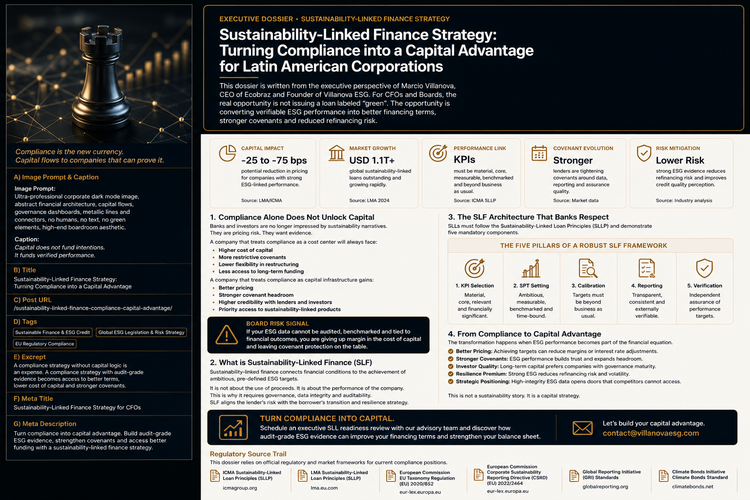
Sustainability-Linked Finance Strategy
Sustainability-linked finance does not reward intention. It rewards measurable performance, credible KPIs and audit-grade evidence. For Latin American corporations, regulatory compliance can become a capital advantage only when it survives lender scrutiny.
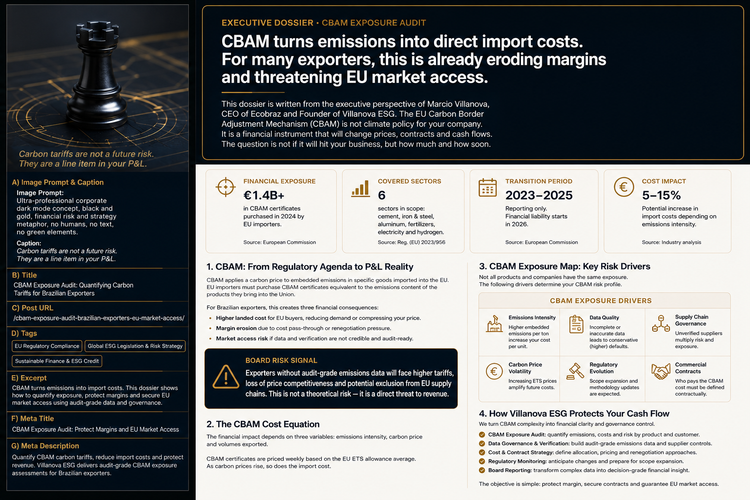
CBAM Exposure Audit for Brazilian Exporters
CBAM converts embedded emissions into import-cost exposure. For Brazilian exporters, the risk is not theoretical. It sits inside product pricing, buyer negotiations, supplier data quality and EU market-access continuity.
The Regulatory Shield: Neutralizing the 5% Revenue Risk in Transnational Supply Chains
Transnational ESG compliance is now a strict financial liability. Discover how the CSDDD and EU frameworks directly threaten corporate balance sheets and learn how to engineer a regulatory shield to protect your revenue and secure optimized capital costs.
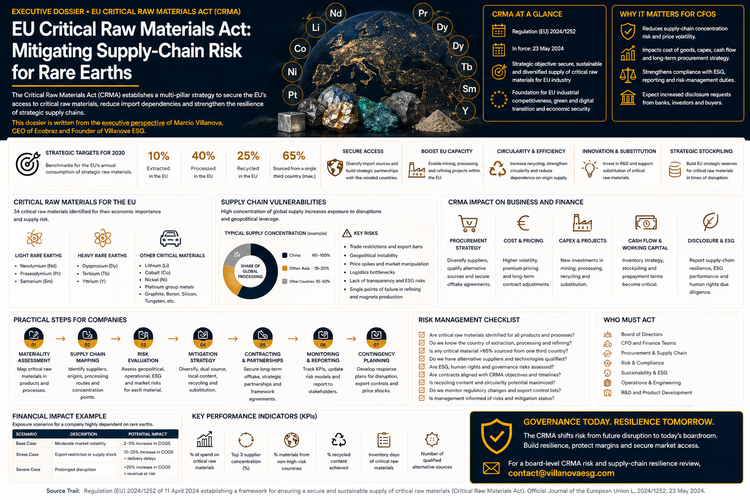
EU Critical Raw Materials Act: Mitigating Supply-Chain Risk for Rare Earths
The EU Critical Raw Materials Act turns rare earths and strategic minerals into a board-level supply-chain resilience test. CFOs must map material dependency, supplier concentration, price shocks, processing bottlenecks and ESG due diligence before disruption compresses margins.
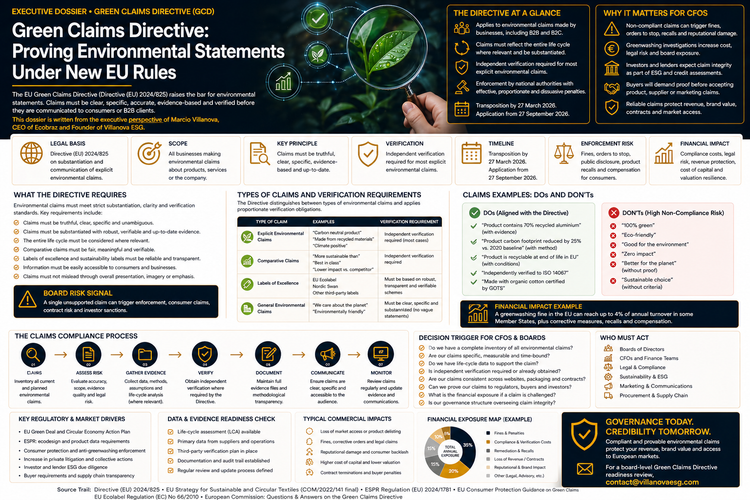
Green Claims Risk: Proving Environmental Statements Under New EU Rules
Green claims risk did not disappear with the suspended Green Claims proposal. Directive (EU) 2024/825 makes vague environmental statements a legal, commercial and financing exposure from 2026. CFOs must control claims before they become liabilities.
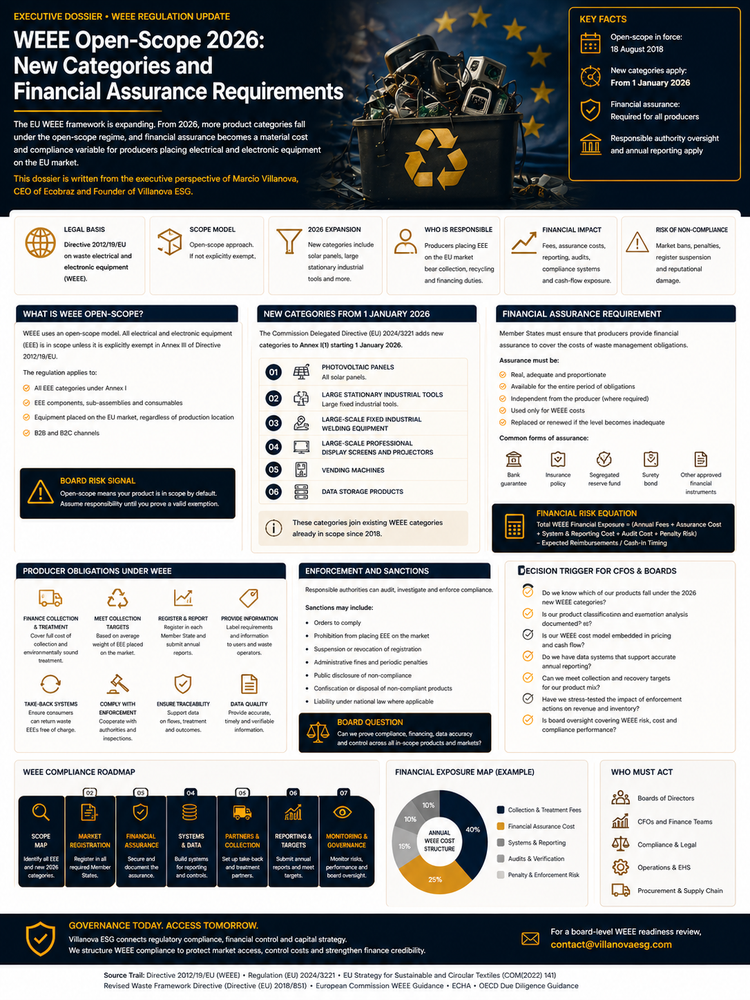
WEEE Open-Scope: Financial Assurance and Producer Responsibility Exposure
WEEE open scope is not new in 2026. It has applied since 15 August 2018. CFOs must control product classification, producer registration, reporting, take-back, financial assurance and back-compliance exposure before EU market access is disrupted.
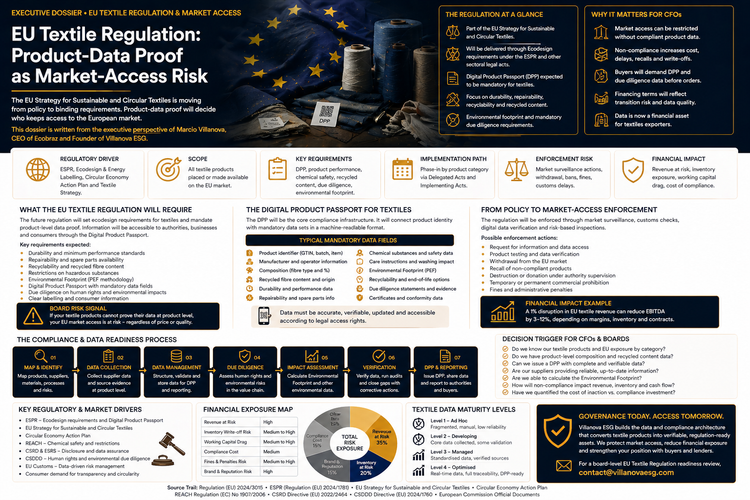
EU Textile Regulation: Product-Data Proof as Market-Access Risk
EU textile compliance is shifting from claims to product-data proof. CFOs must control composition, durability, recyclability, EPR cost, unsold stock and Digital Product Passport readiness before buyers, customs or market surveillance expose the evidence gap.
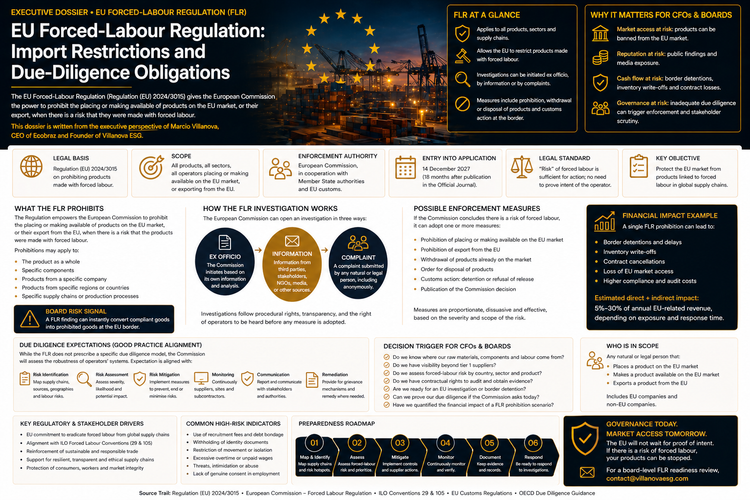
EU Forced-Labour Regulation: Import Restrictions and Due-Diligence Obligations
The EU Forced-Labour Regulation turns labour-risk evidence into a market-access control. CFOs must link products to supplier labour-risk data before investigations, buyer requests or customs action freeze revenue.
Board Duties Under CSDDD: Fiduciary Accountability for Supply-Chain Compliance
CSDDD board exposure is not an automatic EU-wide fiduciary-liability rule. It is an oversight, evidence and governance risk that can affect buyer contracts, lender scrutiny, D&O review and cash-flow continuity.
Scope 3 Emissions Baseline Mapping: Unlocking Access to Green Finance
Scope 3 baseline mapping converts supplier emissions from an uncontrolled estimate into finance-grade evidence. CFOs need auditable data to support disclosure, buyer confidence, transition planning and Sustainability-Linked Loan negotiations.