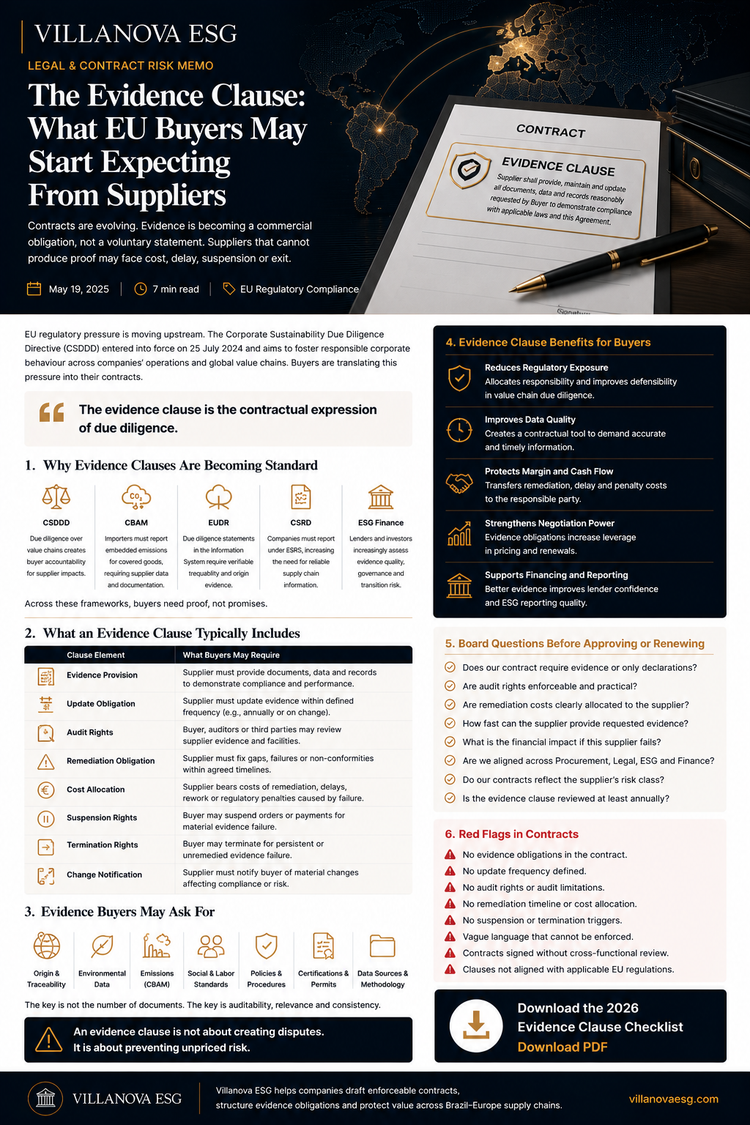
The Evidence Clause: What EU Buyers May Start Expecting From Suppliers
EU buyers may increasingly expect suppliers to accept contract clauses requiring evidence, updates, audit rights, remediation duties and cost allocation tied to regulatory exposure.
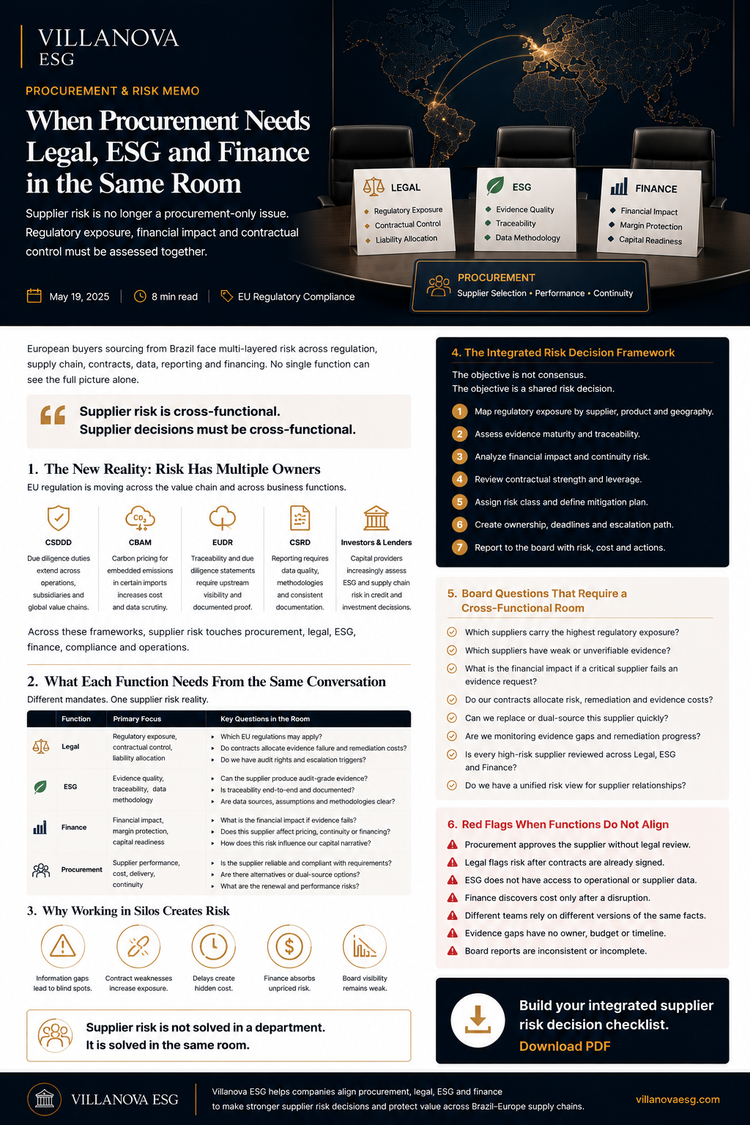
When Procurement Needs Legal, ESG and Finance in the Same Room
Supplier risk can no longer be managed inside procurement alone. EU buyers sourcing from Brazil need legal, ESG and finance aligned before supplier approval, renewal or escalation.
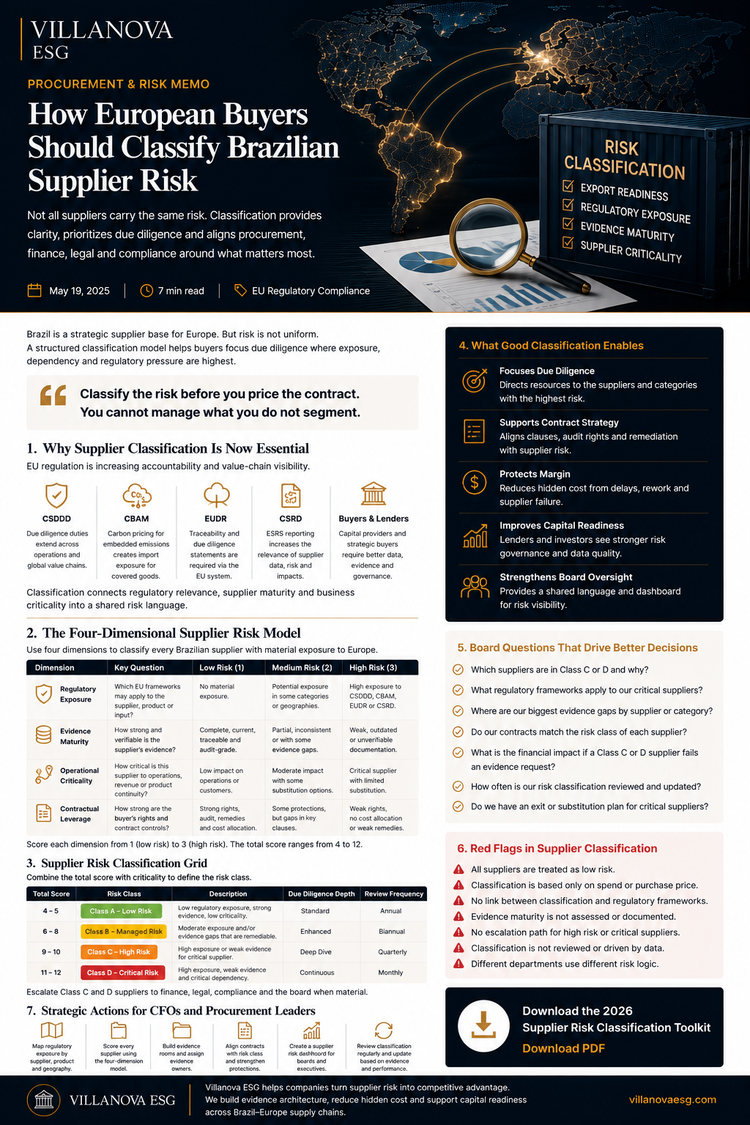
How European Buyers Should Classify Brazilian Supplier Risk
European buyers sourcing from Brazil should classify suppliers by regulatory exposure, evidence maturity, operational criticality and contract leverage before approving, pricing or renewing commercial relationships.
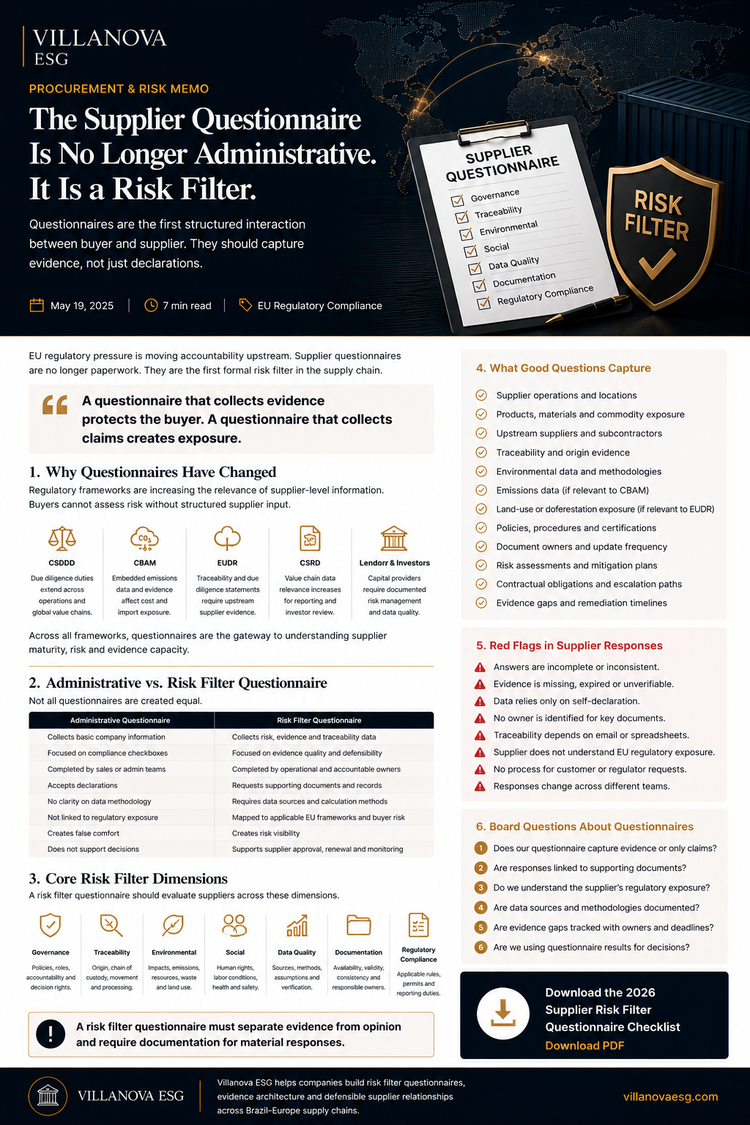
The Supplier Questionnaire Is No Longer Administrative. It Is a Risk Filter.
Supplier questionnaires are no longer paperwork. For EU buyers sourcing from Brazil, they are the first structured risk filter for evidence, traceability, documentation quality and regulatory exposure.
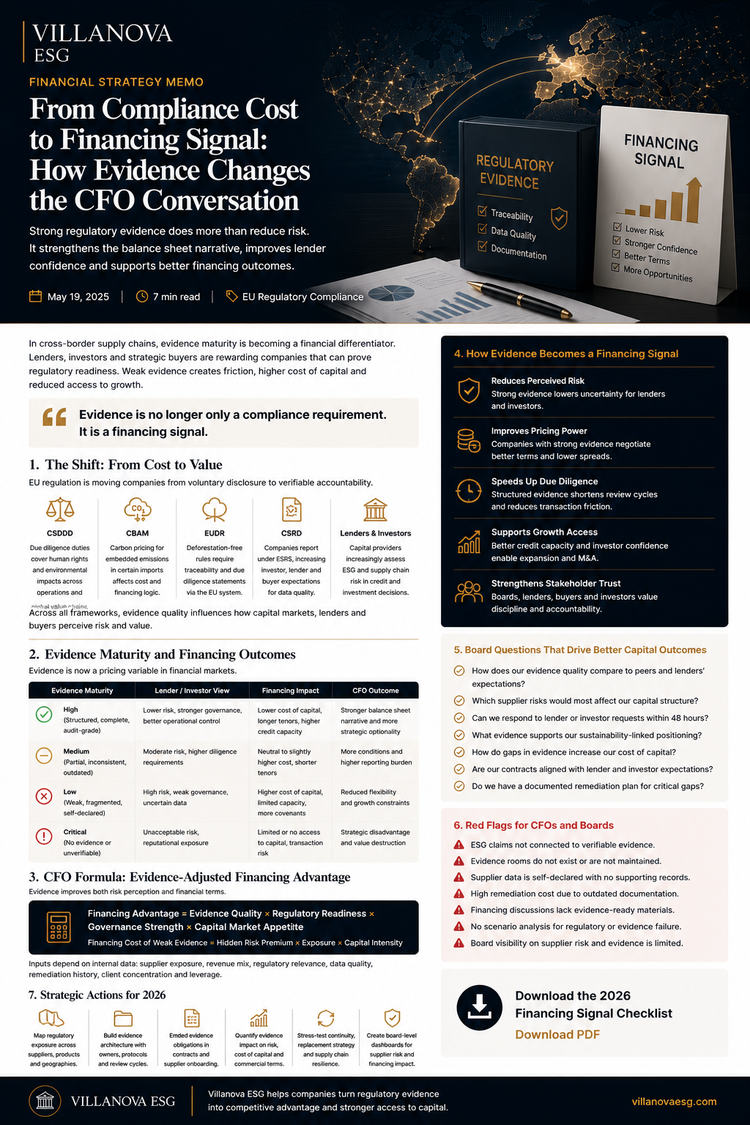
From Compliance Cost to Financing Signal: How Evidence Changes the CFO Conversation
Strong regulatory evidence can shift the CFO conversation from compliance cost to financing readiness, lender confidence, lower risk perception and stronger capital-market positioning.
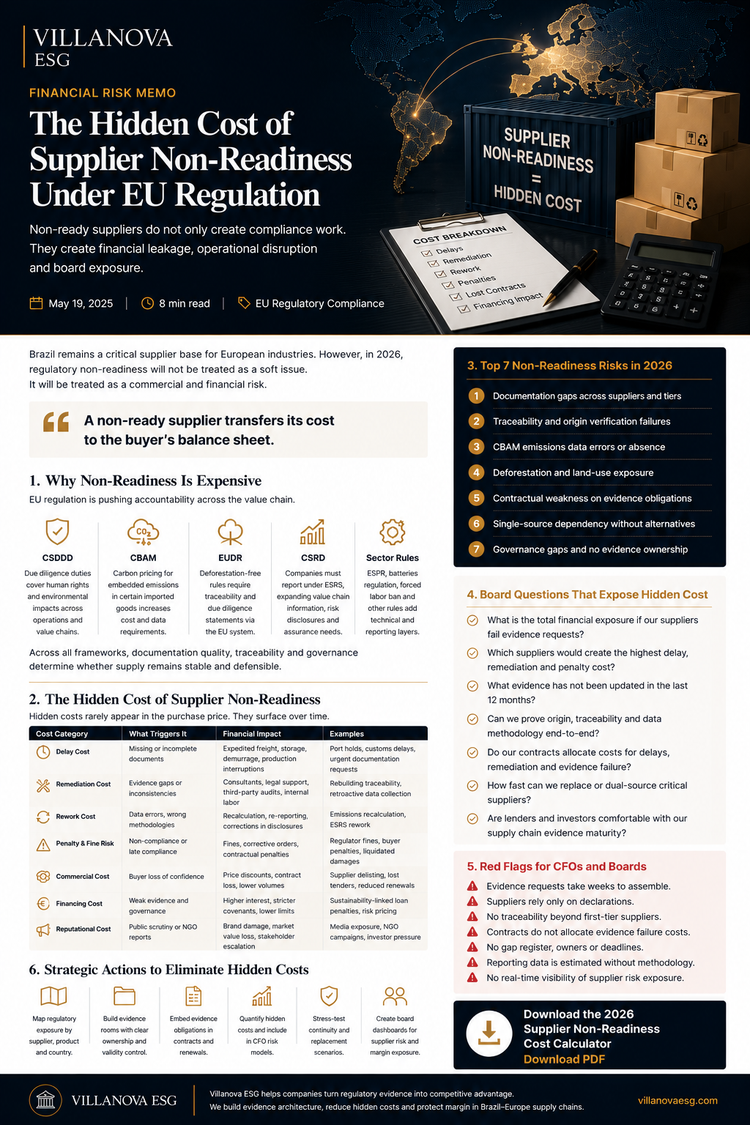
The Hidden Cost of Supplier Non-Readiness Under EU Regulation
Non-ready suppliers create hidden costs across remediation, delays, rework, financing friction, contract risk and board exposure. CFOs must price supplier readiness before EU regulatory pressure turns evidence gaps into financial leakage.
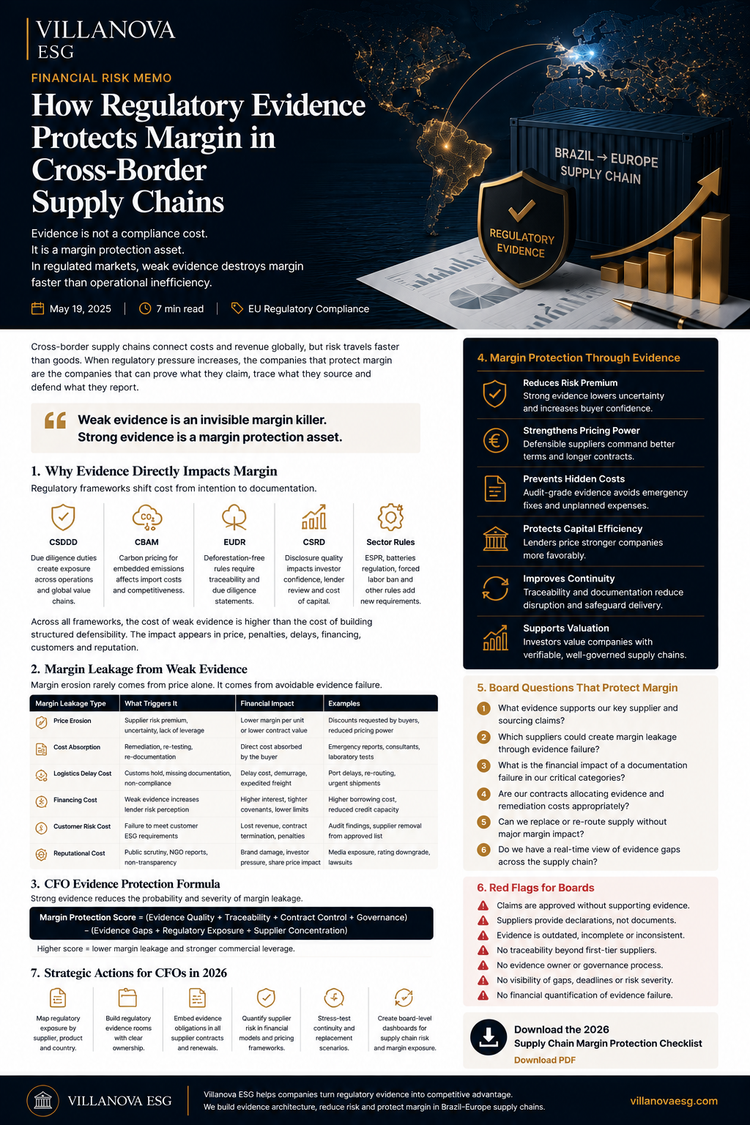
How Regulatory Evidence Protects Margin in Cross-Border Supply Chains
Regulatory evidence is not only a compliance tool. In Brazil-Europe supply chains, it protects margin by reducing remediation cost, contract friction, pricing pressure and continuity risk.
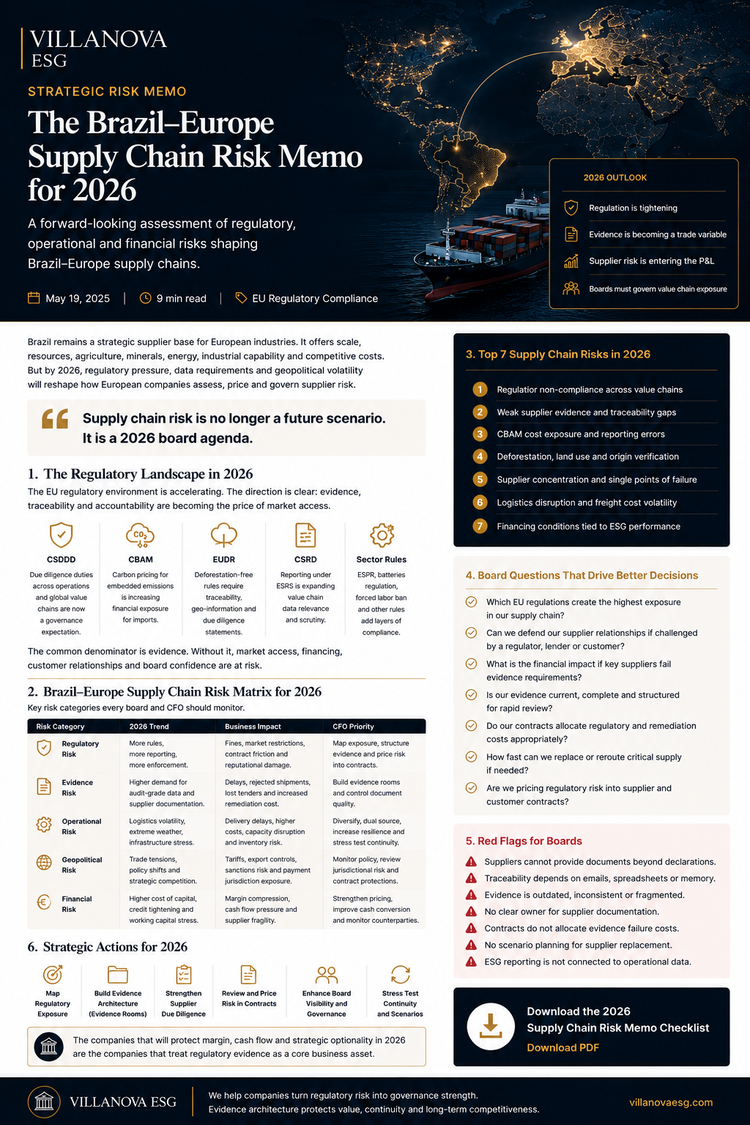
The Brazil-Europe Supply Chain Risk Memo for 2026
Brazil remains strategically important for European supply chains, but 2026 will increase pressure on evidence, traceability, supplier governance, contract discipline and board-level risk control.
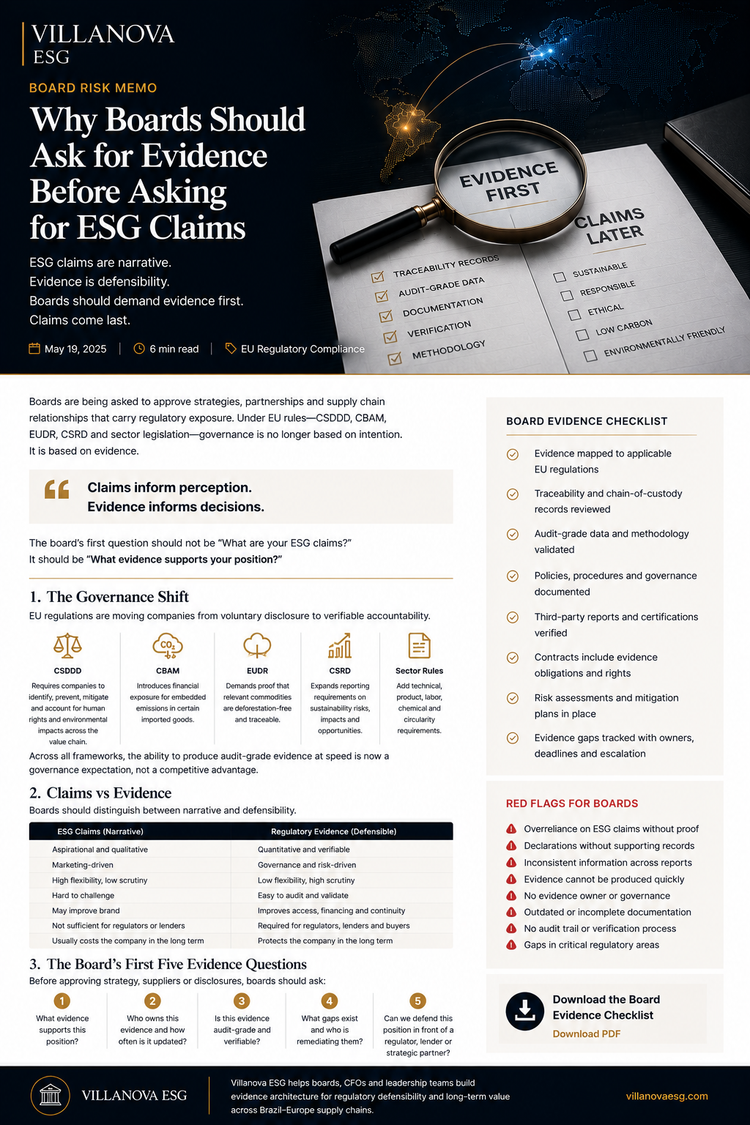
Why Boards Should Ask for Evidence Before Asking for ESG Claims
Boards should no longer begin ESG oversight with claims, commitments or marketing language. They should begin with evidence, traceability, data quality and regulatory defensibility.
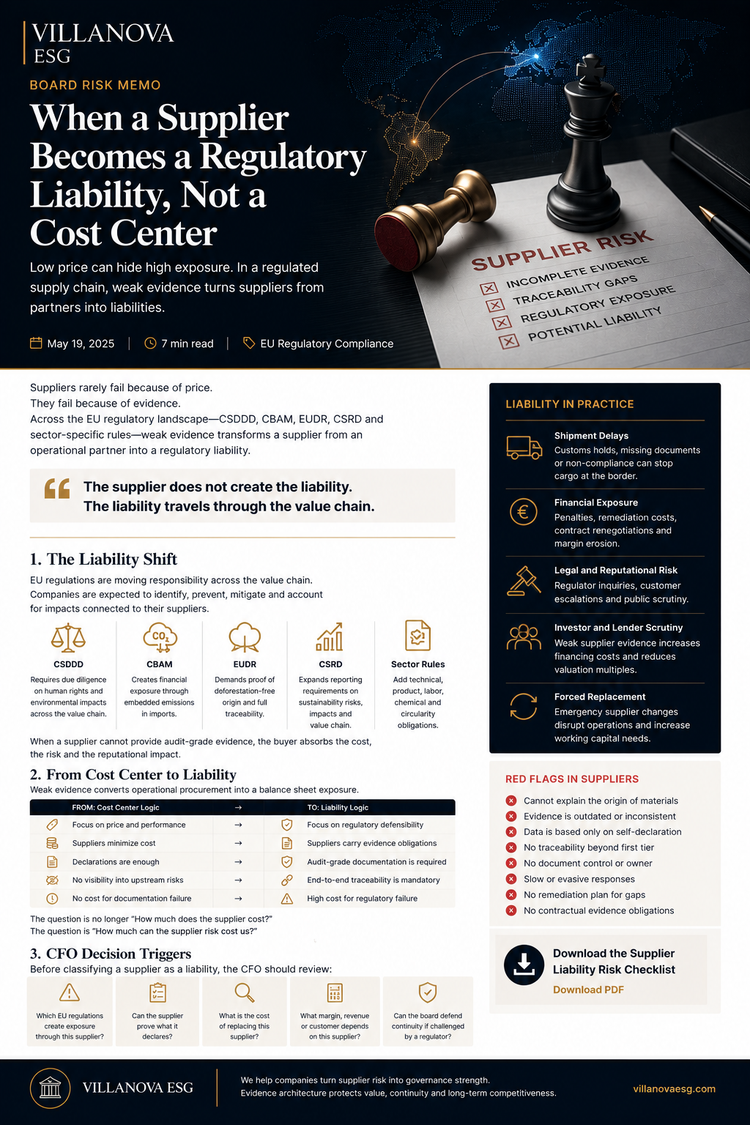
When a Supplier Becomes a Regulatory Liability, Not a Cost Center
Supplier cost is no longer limited to price, logistics and payment terms. In regulated cross-border supply chains, weak evidence can turn a supplier into a financial and governance liability.