Supply-Chain Opacity: Brown Penalty and WACC Impact for CFOs
Supply-chain opacity can become a Brown Penalty through higher WACC, weaker buyer confidence, tighter financing, contract risk and lower valuation resilience. CFOs must convert supplier uncertainty into verified, finance-grade evidence.
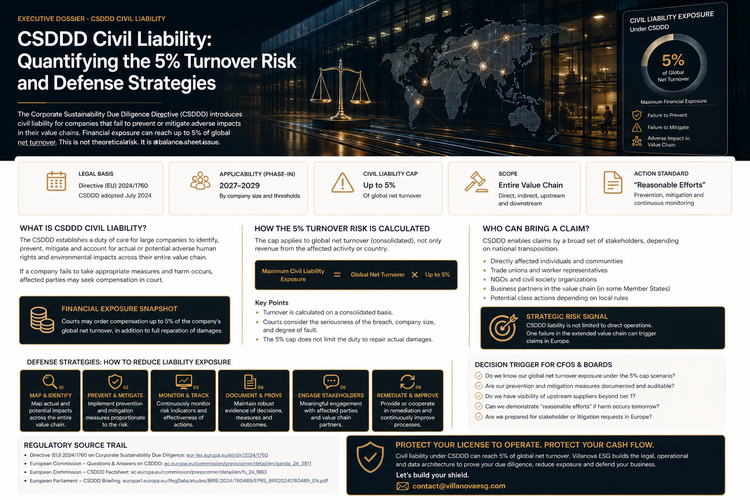
CSDDD Civil Liability: From 5% Turnover Exposure to the New 3% Sanctions Cap
CSDDD risk has shifted from the original 5% turnover exposure to a revised 3% sanctions cap, narrower scope and national civil liability. CFOs must still control supplier evidence, buyer pressure, litigation exposure and cash-flow risk.
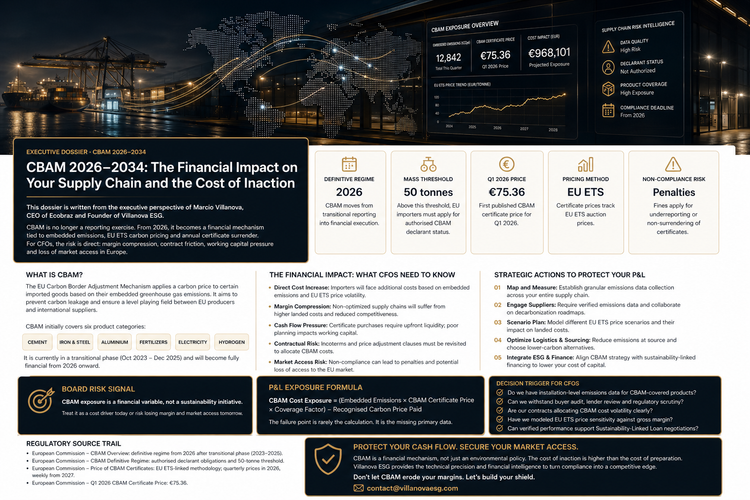
CBAM 2026–2034: The Financial Impact on Your Supply Chain and the Cost of Inaction
CBAM now converts embedded emissions into margin exposure. CFOs must control product scope, emissions evidence, certificate-price sensitivity and contract allocation before European buyers price uncertainty into procurement.
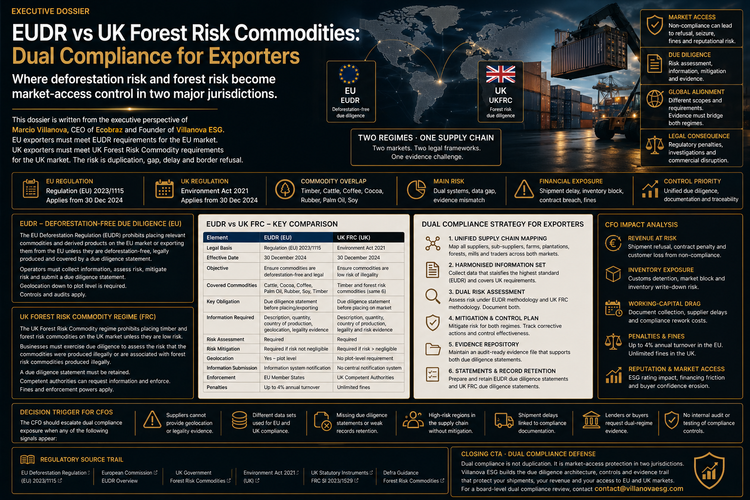
EUDR vs UK Forest Risk Commodities: Dual Compliance for Exporters
EUDR and UK Forest Risk Commodities rules create two different compliance tests for exporters. CFOs must unify origin, legality, geolocation, chain-of-custody and buyer evidence while keeping EU and UK legal outputs separate.
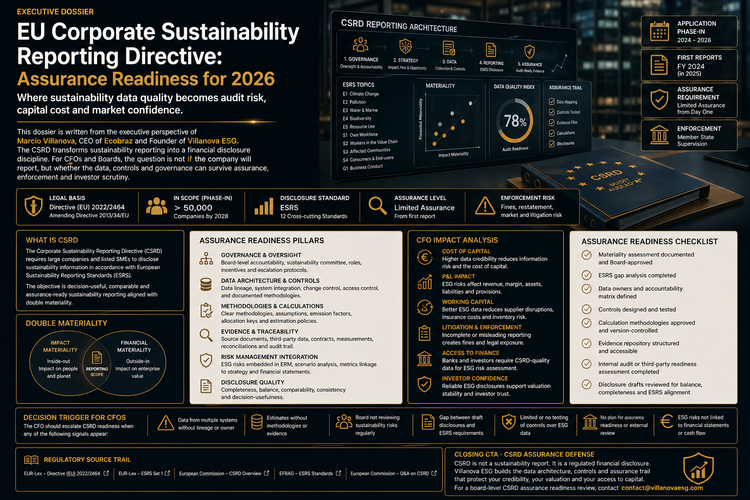
EU Corporate Sustainability Reporting Directive: Assurance Readiness for 2026
CSRD assurance readiness turns sustainability data into audit evidence. CFOs must control ESRS data ownership, source systems, materiality files, supplier evidence, internal controls and disclosure consistency before reporting becomes capital-market friction.
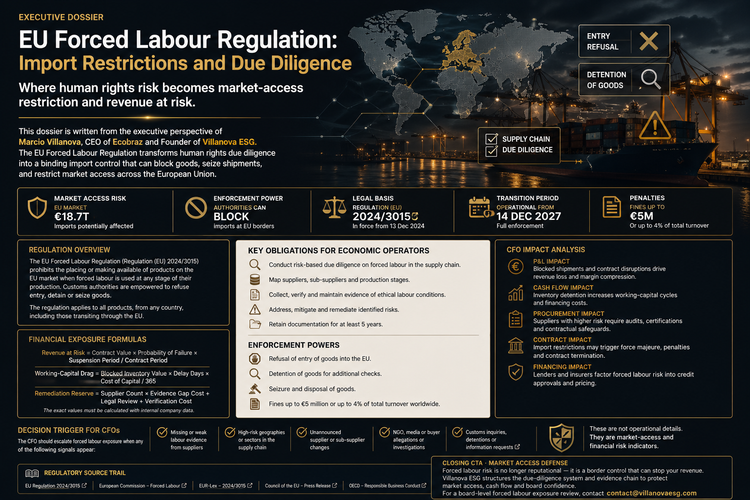
EU Forced Labour Regulation: Import Restrictions and Due Diligence
The EU Forced Labour Regulation turns human rights risk into market-access exposure. CFOs must control supplier mapping, labour-risk evidence, product linkage, customs readiness, remediation reserves and buyer contracts before forced labour allegations block shipments or revenue.
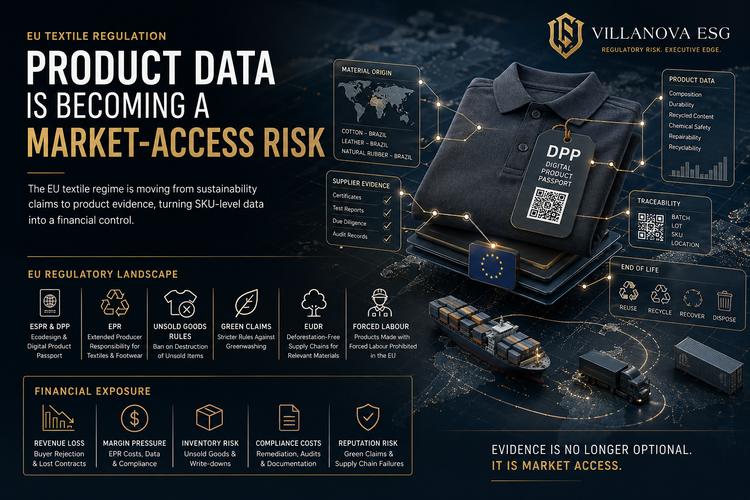
EU Textile Regulation: Product Data Is Becoming a Market-Access Risk
The EU textile regime is moving from product claims to product proof. For exporters, suppliers and CFOs exposed to Europe, product data is becoming a financial control.
WEEE Open-Scope 2026: New Categories and Financial Assurance Requirements
WEEE open scope is not new in 2026; it has applied since 15 August 2018. The current risk is SKU-level classification, producer registration, financial assurance, national reporting, take-back reserves and back-compliance exposure across EU Member States.
CSDDD and Board Duties: Fiduciary Responsibilities for Directors
CSDDD board exposure is not an automatic EU-wide fiduciary-liability rule. Directors face risk through national law, disclosure, oversight failure, D&O friction and weak governance evidence. CFOs must convert supplier due diligence into board-ready financial controls.
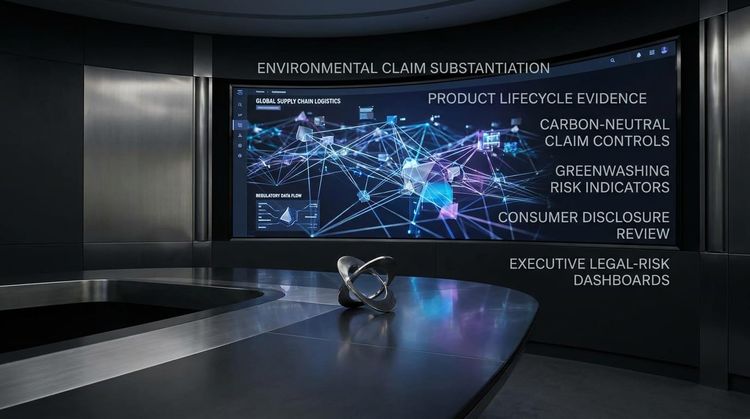
Green Claims Directive: Proving Environmental Statements under New Rules
The Green Claims Directive is not yet binding law, but environmental statements already create greenwashing and financial exposure.