CBAM Is Turning Carbon Data Into a Financial Exposure Map
CBAM is no longer a distant reporting topic. Since 1 January 2026, the mechanism has entered its definitive phase, turning embedded carbon data into a financial exposure variable for EU importers and non-EU industrial suppliers.
Brazilian Agribusiness and the New EU Evidence Barrier
Brazilian agribusiness is no longer evaluated only by productivity, price or export capacity. EU-facing buyers are increasingly testing whether suppliers can produce traceability, deforestation-free evidence and board-readable documentation before commercial continuity is approved.
When Brazilian Beef Becomes a Board-Level Supply Chain Risk
Brazilian beef exposure is moving from procurement negotiation to board-level risk review. Under EU deforestation, due diligence and supply-chain accountability pressure, European buyers will increasingly evaluate evidence architecture before price.
When Europe Regulates Proof, Market Access Becomes an Evidence Test
A recent EU antimicrobial-control case involving Brazilian animal-origin products shows a broader market signal: European access is becoming evidence-based, not claim-based.
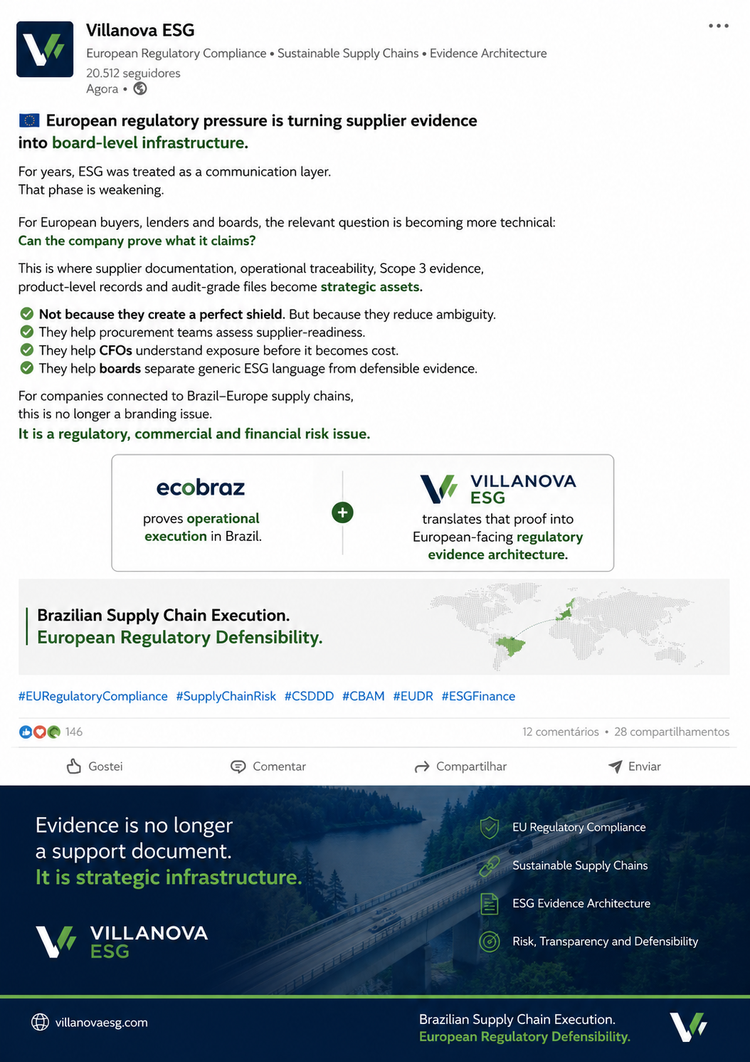
Evidence-Based ESG Is Becoming Strategic Infrastructure
European regulation is weakening the value of generic ESG claims and increasing the strategic value of supplier evidence, operational traceability and audit-grade documentation.
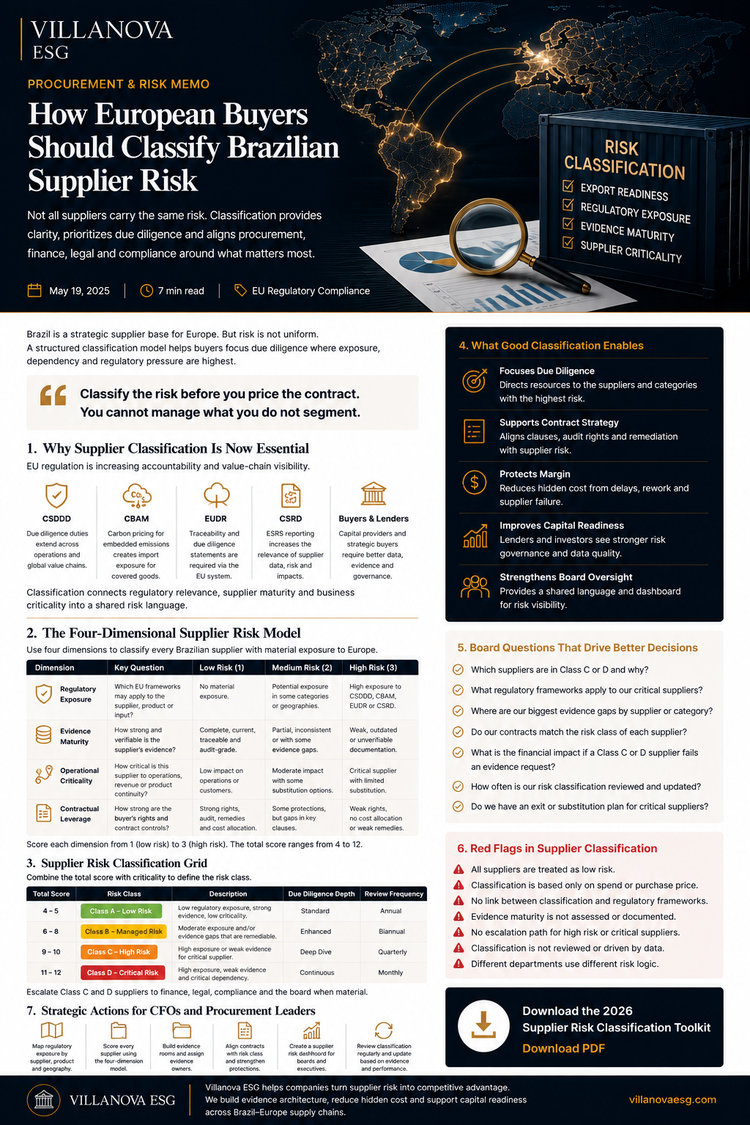
How European Buyers Should Classify Brazilian Supplier Risk
European buyers sourcing from Brazil should classify suppliers by regulatory exposure, evidence maturity, operational criticality and contract leverage before approving, pricing or renewing commercial relationships.
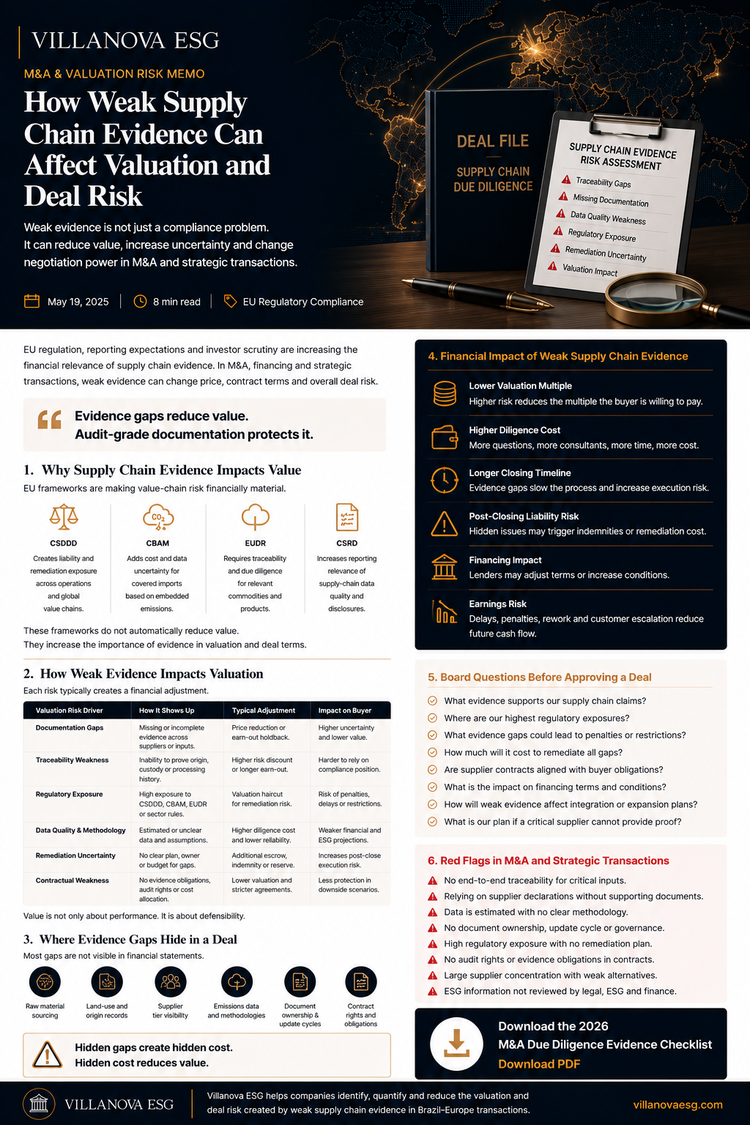
How Weak Supply Chain Evidence Can Affect Valuation and Deal Risk
Weak supply-chain evidence can affect valuation, deal timing, lender confidence, indemnities, escrow requirements and post-closing risk in M&A and strategic transactions.
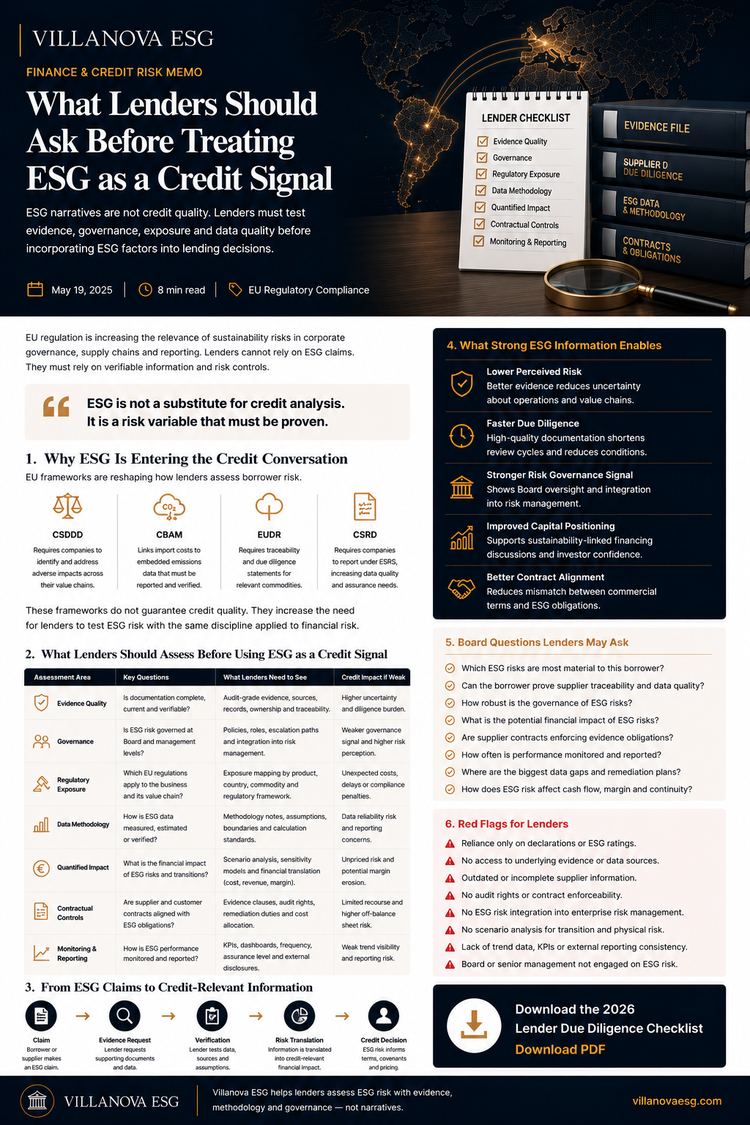
What Lenders Should Ask Before Treating ESG as a Credit Signal
Lenders should not treat ESG narratives as credit signals without testing evidence quality, governance, supplier exposure, data methodology, contractual controls and financial materiality.
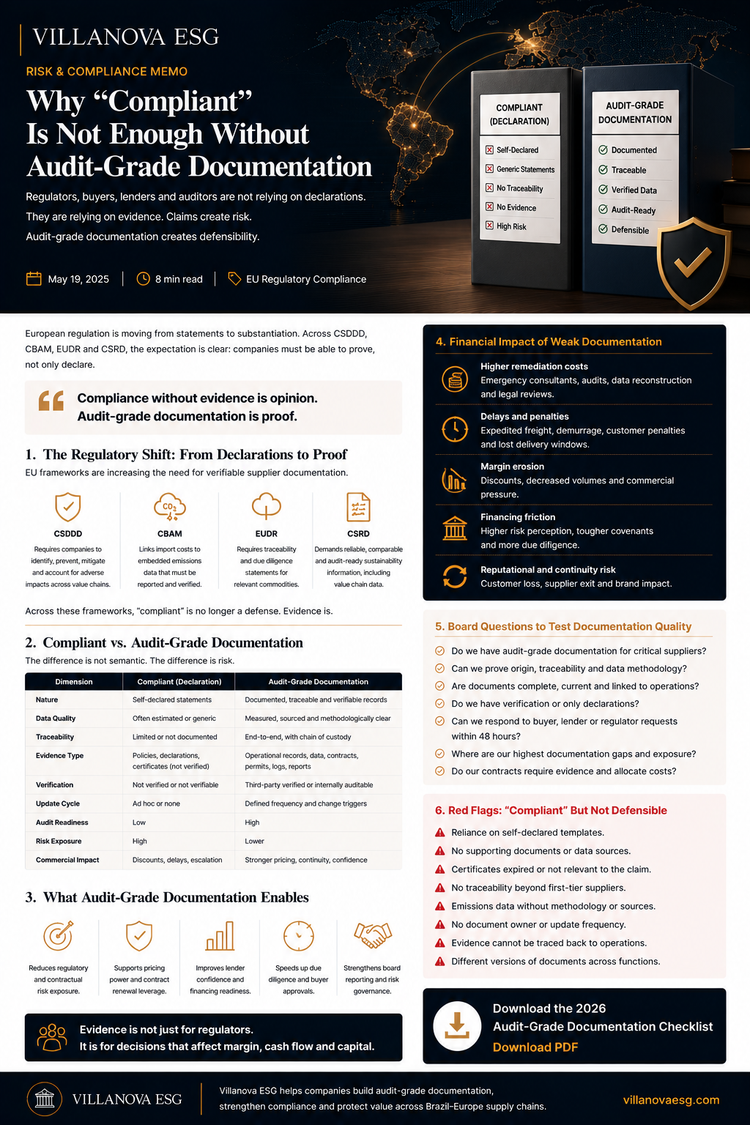
Why “Compliant” Is Not Enough Without Audit-Grade Documentation
Being “compliant” is not defensible if the company cannot produce audit-grade documentation. EU buyers, lenders, auditors and boards increasingly need proof, not declarations.
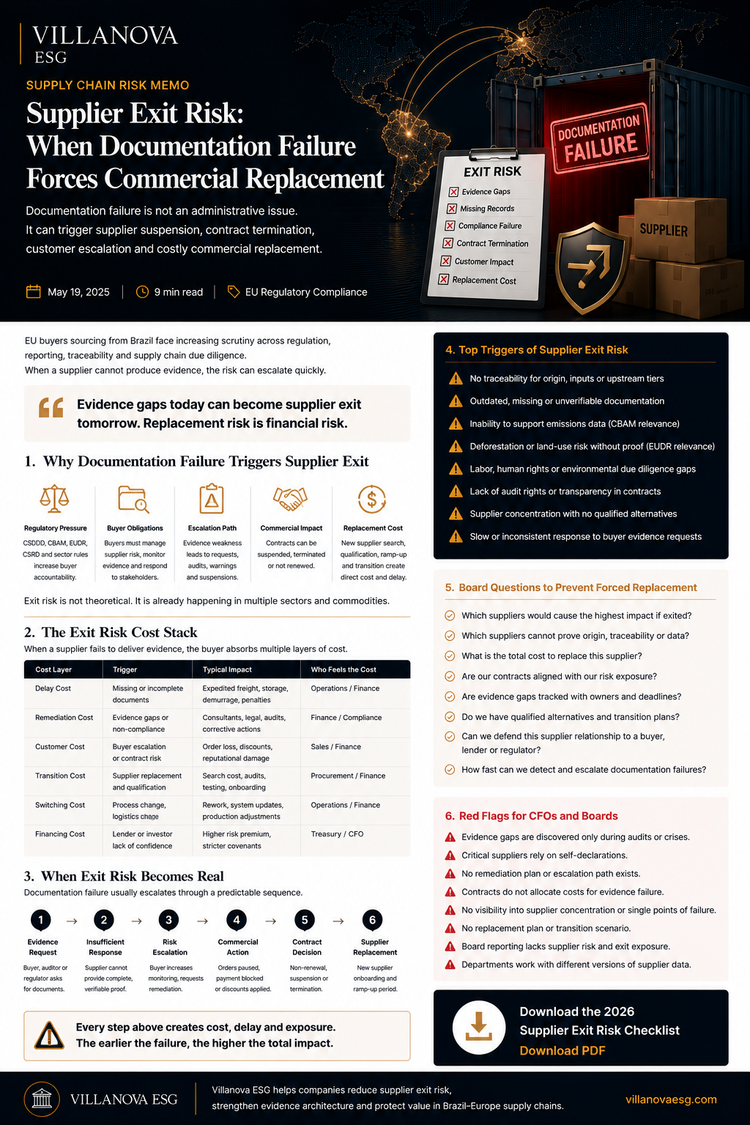
Supplier Exit Risk: When Documentation Failure Forces Commercial Replacement
Supplier exit risk is no longer driven only by price, quality or delivery failure. In regulated Brazil-Europe supply chains, documentation failure can force suspension, non-renewal or commercial replacement.