Industrial Inputs: The Hidden Compliance Risk in EU-Brazil Trade
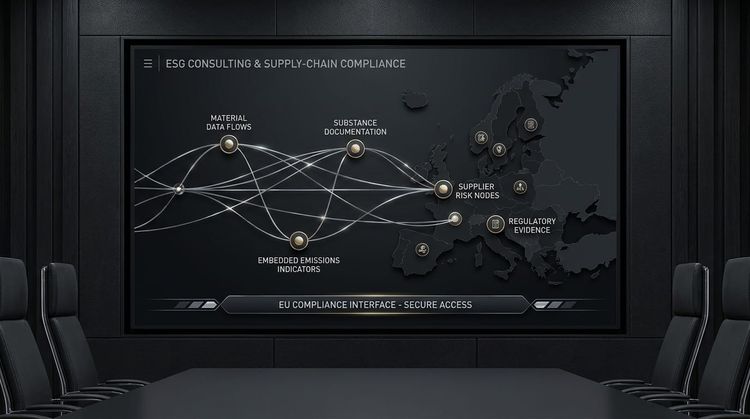
Industrial inputs can carry hidden EU-facing compliance exposure. Chemicals, fertilisers, metals, components and intermediate materials may trigger evidence demands around substances, embedded emissions, supplier due diligence, product safety and buyer-readiness.
Forestry Products and the EU Evidence Standard
Wood, pulp, paper and forestry-derived products are exposed to a new EU evidence standard. Under EUDR pressure, European-facing suppliers must prepare origin documentation, legality evidence, traceability and board-readable risk files.
Coffee and Cocoa Under EU Scrutiny: Evidence Before Market Access
Coffee and cocoa are moving into a new EU-facing evidence environment under deforestation regulation pressure. Suppliers must prepare origin data, traceability files and buyer-readable documentation before commercial continuity becomes exposed.
The EU-Brazil Sector Risk Matrix
Brazilian companies connected to European buyers, investors or supply chains need sector-specific regulatory exposure maps. EUDR, CBAM, CSDDD, CSRD and Digital Product Passport pressure do not affect every sector equally. The decisive variable is evidence readiness.
Scope 3 Exposure Is Becoming a Supplier Selection Filter
Scope 3 emissions are moving from climate reporting into procurement risk. European-facing buyers need supplier data, emissions evidence and value-chain documentation that can support CSRD reporting, financing scrutiny and board-level decisions.
Brazilian FDI Under EU Regulatory Pressure
Brazilian assets connected to European buyers, investors or corporate groups are entering a new due diligence environment. Operational evidence, supplier risk, environmental exposure and regulatory documentation can now affect valuation, transaction confidence and capital allocation.
Battery Supply Chains: Where Traceability Becomes a Financing Signal
Battery supply chains are entering a new EU evidence environment. Carbon footprint, due diligence, material traceability, recycled content and Digital Battery Passport readiness are becoming signals for buyers, lenders and investors evaluating risk.
Textiles and the EU Traceability Shift
Textile supply chains are entering a new EU traceability environment. Product data, supplier evidence, lifecycle documentation and extended producer responsibility will increasingly affect buyer-readiness, contract continuity and regulatory defensibility.
Recycling Is Not a Claim: It Is an Evidence Architecture
Recycling claims are losing value when they are not supported by traceability, documentation and operational proof. European-facing companies need audit-grade evidence that connects waste flows, suppliers, product claims and board-level risk governance.
Electronics Supply Chains and the Coming Evidence Economy
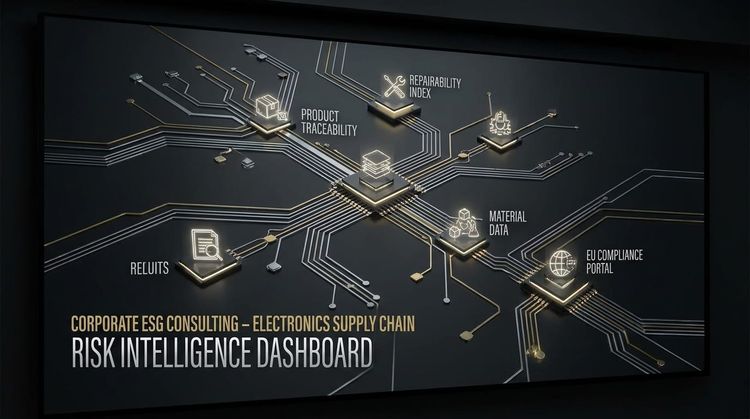
Electronics suppliers connected to the EU market must prepare for a product-level evidence economy. Under the Ecodesign for Sustainable Products Regulation and the Digital Product Passport architecture, data quality will increasingly affect buyer-readiness, traceability and commercial continuity.