
Shadow IT in the Supply Chain: The P&L Risk of Unauditable Data in European Compliance
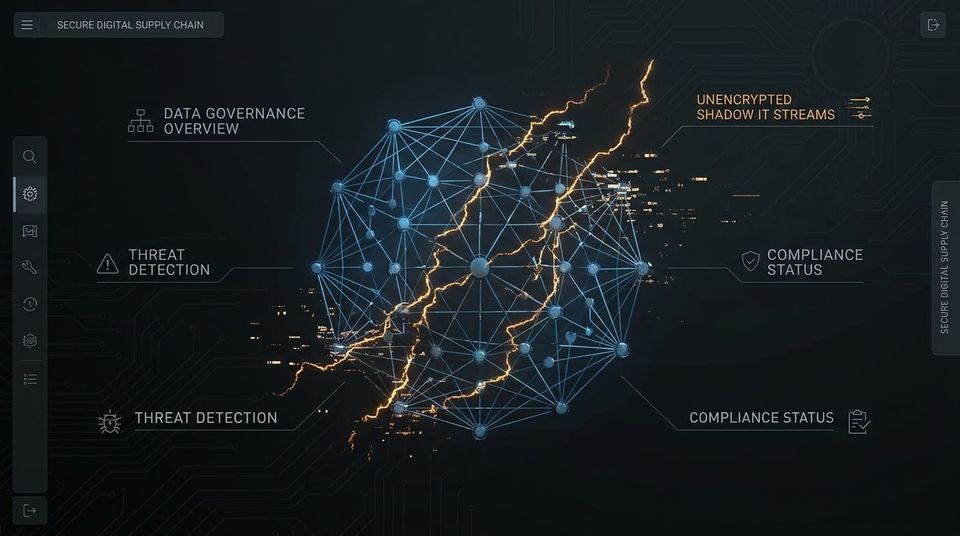
The Regulatory Vulnerability of Fragmented Data
Supply chain data governance is no longer exclusively the domain of the Chief Information Officer (CIO); it is a critical vulnerability for the Chief Financial Officer (CFO). As European regulations such as the Corporate Sustainability Due Diligence Directive (CSDDD) and the Ecodesign for Sustainable Products Regulation (ESPR) mandate absolute traceability, the reliance on "Shadow IT" has become a severe corporate liability.
Shadow IT refers to the localized, unauthorized software, fragmented spreadsheets, and unencrypted messaging applications utilized by lower-tier suppliers to track operational data. For a Brazilian exporter, aggregating this unverified, manually entered data to satisfy European customs is a critical compliance failure. European authorities do not accept data without a forensic chain of custody.
The Audit Collision: When Data Fails the Verification Test
The implementation of the Digital Product Passport (DPP) requires machine-readable, immutable data that maps the entire product lifecycle.
When European auditors evaluate a Brazilian exporter's compliance framework, they trace the data architecture back to the point of origin.
- The Chain of Custody Break: If a Tier 2 or Tier 3 supplier records georeferenced data or carbon metrics on an isolated Excel spreadsheet or a localized, unvetted mobile application, the chain of custody is broken.
- Automatic Audit Failure: Auditors are mandated to reject data generated outside of secure, standardized Enterprise Resource Planning (ERP) or compliance-grade systems. The data is legally classified as "unauditable."
- Contractual Contamination: In the eyes of European regulators, unauditable data is equivalent to missing data. The European importing matrix, facing strict civil liability under the CSDDD, will immediately terminate procurement contracts with any Latin American supplier whose data infrastructure cannot pass a forensic IT audit.
(Source reference: European Commission guidelines on data interoperability for the Digital Product Passport and CSDDD reporting standards).
The Direct Hit to the Balance Sheet
The presence of Shadow IT deep within your supply chain directly attacks your corporate valuation. Relying on fragmented data architectures ensures that your compliance reports are structurally flawed.
When European customs authorities reject a shipment due to defective DPP data, the resulting border paralysis triggers catastrophic demurrage costs. Furthermore, if international credit syndicates identify Shadow IT during the underwriting process for corporate debt, they will flag the operation as highly exposed to European regulatory blockades, drastically inflating the risk premium and the cost of capital.
The Villanova ESG Shield: Strategic Intervention
At Villanova ESG, we eradicate the compliance risks embedded in your data architecture. We replace fragmented Shadow IT with audit-proof, verifiable reality. We secure your market access through our four uncompromising pillars:
- Logistical Reality Audit: We dismantle the dangerous reliance on fragmented supplier data. We execute deep-tier, forensic IT and operational audits across your supply network, identifying and eliminating the use of Shadow IT in critical compliance nodes (Tiers 1, 2, and 3).
- Cross-Border Regulatory Shield: We architect data pipelines that align your entire supply chain directly with the rigorous interoperability and security protocols demanded by the ESPR and CSDDD. We guarantee that the data feeding your European buyers is structurally flawless and legally defensible.
- Cost of Capital Optimization: An institutional-grade, auditable data infrastructure is a premium financial asset. We leverage the eradication of Shadow IT and the implementation of verified traceability to secure Sustainability-Linked Loans (SLLs), converting data integrity into a mechanism that structurally reduces your Weighted Average Cost of Capital (WACC).
- P&L and Revenue Protection: We defend your cash flow against the financial fallout of failed audits. By ensuring your data infrastructure can withstand hostile European scrutiny, we protect your revenue lines from border rejections, confiscatory fines, and the loss of essential commercial contracts.
European compliance is a data-driven mandate. A fractured IT infrastructure in your supply chain is actively threatening your European market access. Do not leave your commercial contracts exposed to the vulnerabilities of Shadow IT. Contact our risk assessment team immediately to structure your cross-border regulatory shield and audit your data architecture at contact@villanovaesg.com
Marcio Villanova CEO, Ecobraz | Founder, Villanova ESG