Strategic Divestment: The Abandonment of Commercial Routes Rendered Unviable by Compliance Costs
The End of Expansion for Expansion’s Sake
For decades, the mandate of the multinational Board of Directors was relentless top-line growth and the expansion of global supply routes. The logic was simple: source raw materials from the cheapest jurisdictions and scale the operation. In 2026, the European Union’s legislative architecture—specifically the Corporate Sustainability Due Diligence Directive (CSDDD) and the Carbon Border Adjustment Mechanism (CBAM)—has violently shattered this economic model.
The cost of regulatory compliance is no longer a marginal administrative fee; it is a massive structural barrier to entry. If a Brazilian corporation operates a commercial route that relies on highly fragmented, deep-tier suppliers situated in high-risk deforestation or labor-violation zones, the Capex and OpEx required to mathematically prove compliance to European authorities will frequently exceed the Gross Margin of the product itself. For the Board of Directors, identifying and surgically excising these toxic commercial routes through Strategic Divestment is now a core fiduciary duty.
The Mathematics of the Zombie Route
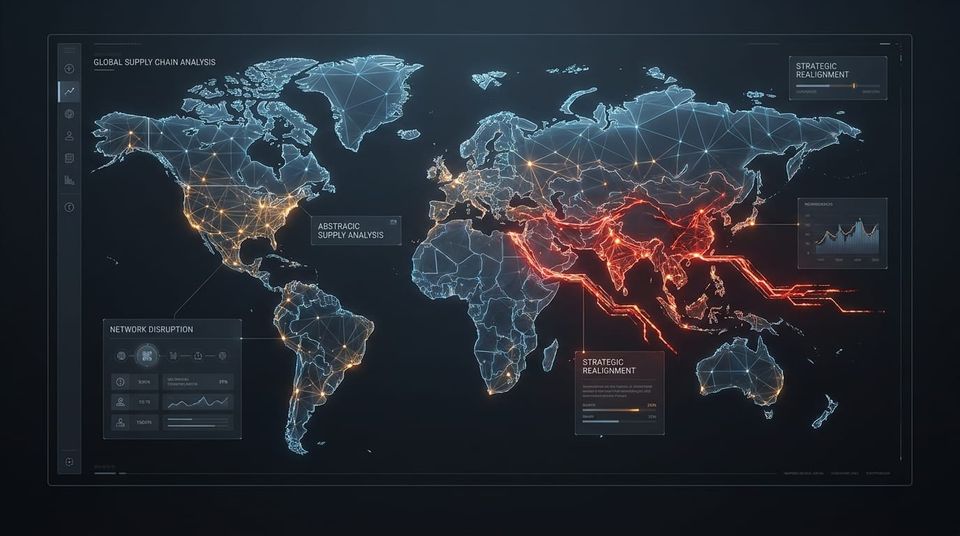
A commercial route becomes a "zombie route" when the illusion of top-line revenue masks catastrophic bottom-line hemorrhaging caused by compliance and traceability costs.
- The Compliance Margin Squeeze: To legally export a commodity into the EU, the exporting matrix must fund forensic satellite tracking (EUDR), third-party carbon audits (CBAM), and deep-tier labor mapping (CSDDD). If a specific route yields low margins but requires exorbitant compliance spending to verify hundreds of unmapped micro-suppliers, the operational math collapses.
- The Valuation Drag: Maintaining unviable routes destroys the overall corporate valuation. When institutional investors analyze a company's portfolio, they penalize the presence of high-risk, low-compliance-ROI operations. These toxic nodes inflate the company's consolidated risk profile, acting as an anchor on the Enterprise Value (EV).
- The Divestment Imperative: The hardest strategic decision for a CEO is intentionally shrinking the top-line revenue to protect the EBITDA. However, failing to divest from a mathematically unviable route guarantees that the profits from your premium, compliant operations will be continuously siphoned off to subsidize the legal and auditing costs of the toxic route.
(Source reference: European Commission impact assessments on CSDDD implementation costs and global supply chain restructuring trends).
The Sunk Cost Fallacy of the Legacy Supply Chain
Corporate boards frequently fall into the "sunk cost fallacy," pouring millions into localized ESG consulting and localized remediation efforts in a desperate attempt to "clean up" a fundamentally broken supply route.
If the underlying geometry of the local market—such as systemic lack of digital infrastructure, endemic informal labor, or irreversible physical climate risks—makes continuous, automated data extraction impossible, the route cannot be saved. Attempting to force European data standards onto a structurally incompatible local reality is a catastrophic misallocation of corporate capital.
The Villanova ESG Shield: Strategic Intervention
At Villanova ESG, we provide the Board of Directors with the ruthless mathematical clarity required to execute strategic divestments. We do not try to save toxic routes; we isolate and eliminate them to protect your global valuation. We secure your corporate strategy through our four uncompromising pillars:
- P&L and Revenue Protection: We protect your consolidated EBITDA from the compliance margin squeeze. By executing aggressive "Compliance ROI" modeling, we identify exactly which commercial routes are structurally unviable under EU law, empowering the board to sever toxic operations and stop the financial hemorrhage.
- Logistical Reality Audit: We eliminate the sunk cost fallacy. We deploy forensic data mapping to differentiate between supply chains that require temporary remediation Capex and those that are mathematically impossible to align with European directives. We provide the unassailable data required to justify the divestment to shareholders.
- Cross-Border Regulatory Shield: We architect a leaner, highly fortified global supply network. By divesting from unquantifiable risks and concentrating capital into fully traceable, structurally compliant routes, we ensure the surviving operations possess absolute interoperability with European customs algorithms, securing frictionless market access.
- Cost of Capital Optimization: A streamlined, fully compliant operational portfolio is a premium asset for international capital markets. By proactively divesting from high-risk routes, we drastically improve your ESG credit profile, leveraging this optimized risk matrix to secure Sustainability-Linked Loans (SLLs) and structurally reduce your Weighted Average Cost of Capital (WACC).
Clinging to legacy commercial routes that cannot survive European compliance costs is a direct threat to your corporate survival. Do not allow zombie operations to destroy your consolidated EBITDA. Contact our risk assessment team immediately to structure your cross-border regulatory shield and architect your strategic divestment protocol at contact@villanovaesg.com
Marcio Villanova CEO, Ecobraz | Founder, Villanova ESG