
Information Asymmetry Blockade: How Fragmented Data Triggers EU Customs Alerts
The Operational Threat of Data Asymmetry
For decades, global supply chains operated efficiently despite massive internal information asymmetry. A procurement team in Brazil did not necessarily need to share its Tier 3 supplier's labor compliance records with the logistics department managing the European export. In 2026, the European Union's digital enforcement infrastructure has turned this internal fragmentation into a fatal operational flaw.
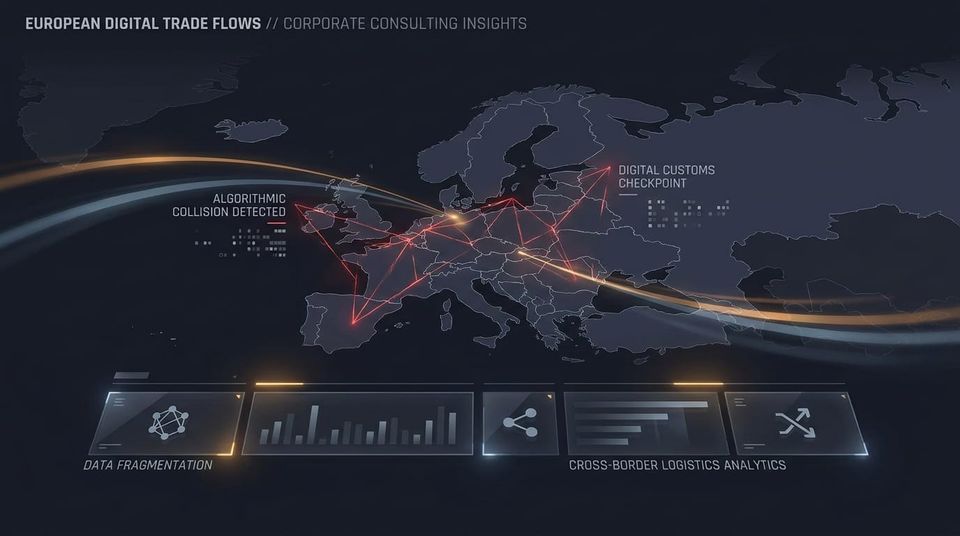
When your cargo reaches a European port under the scrutiny of the Corporate Sustainability Due Diligence Directive (CSDDD), the Deforestation Regulation (EUDR), or the Digital Product Passport (DPP), it is not inspected by a human agent; it is processed by a centralized customs algorithm. If the data accompanying the shipment is fragmented, incomplete, or asymmetrical across your corporate silos, the algorithm does not request clarification. It automatically triggers a regulatory blockade.
The Mathematics of Algorithmic Rejection
European customs systems operate on a binary logic: absolute data integrity or immediate rejection. Information asymmetry creates a "data void," which the algorithm mathematically classifies as highest-probability risk. The financial consequences of this algorithmic rejection hit the balance sheet instantaneously.
- Demurrage and Port Detention Hyperinflation: The moment an automated alert is triggered, the cargo is legally frozen at the port. The daily demurrage, storage, and detention fees in premium European hubs like Rotterdam or Hamburg are exorbitant. Within weeks, these logistics penalties can entirely consume the commercial value of the stranded asset.
- The "Burden of Proof" Reversal: When an alert is triggered due to fragmented data, the presumption of innocence is voided. The European buyer and the Brazilian exporter are immediately forced into an emergency "discovery" phase, requiring massive, unbudgeted legal and forensic Capex to prove the cargo's compliance to hostile regulatory authorities.
- Contractual Default and Margin Collapse: European off-takers operate under strict Just-In-Time (JIT) inventory models. An algorithmic blockade at the border disrupts their manufacturing lines. This immediately triggers contractual penalty clauses, indemnification demands, and the highly probable termination of future procurement orders, destroying your projected EBITDA.
(Source reference: European Commission guidelines on the EU Single Window Environment for Customs and automated risk management frameworks).
The Legacy Systems Trap
The root cause of information asymmetry lies in legacy enterprise architecture. Most C-Level executives incorrectly assume their ERP (Enterprise Resource Planning) system is handling the compliance data. However, legacy ERPs are designed to track financial ledgers and basic inventory, not deep-tier, georeferenced environmental and social metrics.
When the sustainability department keeps supplier certifications in disconnected spreadsheets while the logistics team generates the export manifest through a separate software, the resulting submission to the European customs API is structurally fractured. This internal disconnect is exactly what the European algorithms are programmed to detect and penalize.
The Villanova ESG Shield: Strategic Intervention
At Villanova ESG, we eradicate internal data fragmentation. We ensure the data you submit to European customs is structurally flawless and algorithmically verified before the cargo ever leaves the Latin American port. We protect your operational continuity through our four uncompromising pillars:
- Cross-Border Regulatory Shield: We architect a unified, centralized data pipeline that consolidates your disparate internal information silos into a single, cohesive compliance payload. We align this architecture directly with the strict API requirements of the EU Single Window for Customs, neutralizing the risk of algorithmic blockades.
- Logistical Reality Audit: We eliminate the data voids that trigger customs alerts. We execute deep-tier, forensic audits of your physical supply network, extracting the primary, cryptographic data required to fill the gaps in your legacy systems and prove absolute regulatory compliance to the European matrix.
- P&L and Revenue Protection: We defend your EBITDA against the devastating costs of port detention and contractual default. By guaranteeing flawless data interoperability, we ensure your cargo clears European customs without friction, protecting your working capital and securing your commercial revenue streams.
- Cost of Capital Optimization: A structurally unified, flawlessly tracked supply chain is a highly liquid financial asset. We leverage your audited, blockade-resistant data architecture to secure Sustainability-Linked Loans (SLLs), transforming operational resilience into a mechanism that actively reduces your Weighted Average Cost of Capital (WACC).
Fragmented corporate data is a mathematical guarantee of a European customs blockade. Do not allow internal information asymmetry to destroy your cross-border cash flow. Contact our risk assessment team immediately to structure your cross-border regulatory shield and unify your compliance architecture at contact@villanovaesg.com
Marcio Villanova CEO, Ecobraz | Founder, Villanova ESG