CSDDD and Joint Liability: How Supplier Non-Compliance Contaminates Global Revenue
The End of Plausible Deniability
The Corporate Sustainability Due Diligence Directive (CSDDD) has fundamentally altered the legal architecture of international trade. The era where a company could claim ignorance regarding the operations of its indirect suppliers is legally dead. As European member states finalize the transposition of this directive into national law, the focus shifts entirely from voluntary disclosures to strict civil liability.
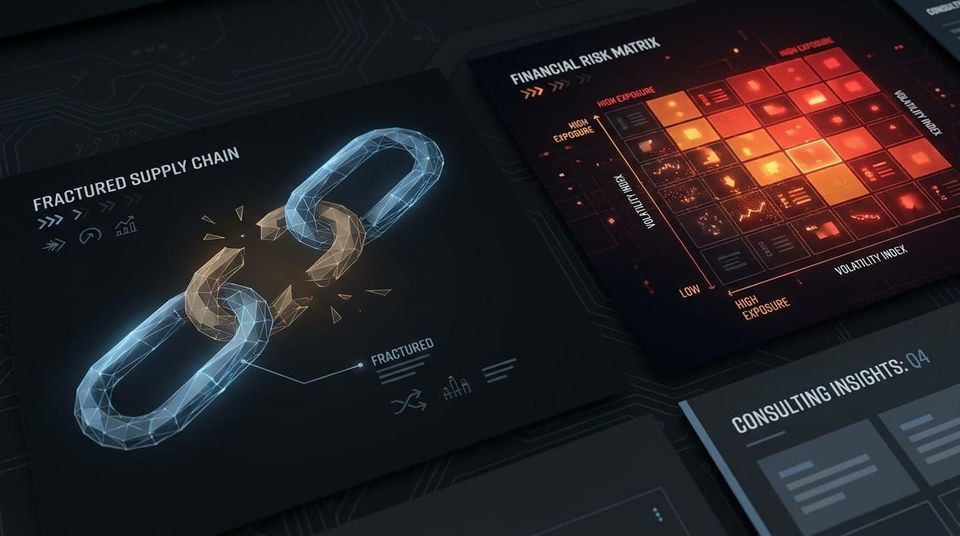
For Brazilian companies operating within global supply chains, the operational boundaries have collapsed. Under CSDDD, a labor or environmental violation occurring at a Tier 3 supplier in the Brazilian interior is legally and financially treated as a violation committed by the European importing matrix. This is the mechanism of joint liability. Your supplier's failure is now your financial liability.
The Mathematics of the 5% Global Turnover Penalty
European regulatory bodies have weaponized the CSDDD with unprecedented financial enforcement mechanisms. The directive establishes that non-compliance can result in fines of up to 5% of a company’s net worldwide turnover.
(Source reference: Official European Commission CSDDD regulatory text and enforcement guidelines).
This is not a localized fine; it is a confiscatory penalty applied to global consolidated revenue.
- Civil Liability Exposure: European buyers are now legally exposed to lawsuits from affected communities or NGOs regarding impacts in third countries like Brazil.
- Contractual Contamination: To mitigate this exposure, European corporations are cascading contractual liabilities down the chain. Brazilian exporters who cannot provide auditable, real-time data proving their entire supply chain is clean will simply be excised from European procurement systems.
- The P&L Impact: Losing a primary European buyer due to a compliance failure in your Tier 2 supplier is a direct hit to your top-line revenue. The operational risk immediately becomes a severe financial impairment.
The Logistical Blind Spot
Many Latin American executives mistakenly believe that auditing direct Tier 1 suppliers is sufficient. The CSDDD explicitly mandates mapping and risk mitigation across the "chain of activities." If a Brazilian exporter buys raw materials from an unverified source, the entire export cargo becomes a regulatory hazard for the European buyer.
Customs authorities and European national competent authorities will not accept generic sustainability reports. They demand granular, georeferenced, and verifiable data proving the absence of environmental degradation and human rights violations.
The Villanova ESG Shield: Strategic Intervention
At Villanova ESG, we recognize that CSDDD compliance is not an HR or environmental department task. It is a critical function of the Board of Directors to prevent global revenue contamination. We operate exclusively to neutralize these regulatory threats through four uncompromising pillars:
- Cross-Border Regulatory Shield: We architect operational compliance with the specific, aggressive demands of the CSDDD. By structuring legally binding due diligence protocols across your supply chain, we prevent your operation from becoming a liability to your European buyers, securing your market access.
- P&L and Revenue Protection: The 5% global turnover fine is a lethal financial threat. We protect your revenue lines by establishing airtight traceability systems that eliminate the risk of supplier contamination, shielding your cash flow from European civil litigation and administrative sanctions.
- Logistical Reality Audit: We execute rigorous, end-to-end audits of your entire supply chain (Tiers 1, 2, and 3). We move beyond generic questionnaires, applying forensic data collection to map the exact compliance reality of your indirect suppliers, effectively eliminating blind spots.
- Cost of Capital Optimization: The same audited supply chain data required to satisfy CSDDD is the primary asset needed to negotiate Sustainability-Linked Loans (SLLs). We convert your regulatory compliance into a verifiable metric for international creditors, optimizing your capital structure and reducing your WACC.
Operating with unmapped suppliers is a mathematical gamble your cash flow cannot sustain.
Marcio Villanova CEO, Ecobraz | Founder, Villanova ESG
The financial liabilities of the CSDDD are actively reshaping European procurement contracts. Do not leave your global revenue exposed to the hidden failures of your indirect suppliers. Contact our risk assessment team immediately to structure your cross-border regulatory shield at contact@villanovaesg.com